
Indonesia does not have a single dedicated “digital nomad visa,” but remote workers can legally live and work in Bali and across the country using the E33G Remote Worker KITAS (valid for 1 year) or the B211A Social Cultural Visa (up to 180 days). Both options allow you to work remotely for a foreign employer while enjoying Indonesia’s low cost of living, tropical climate, and thriving coworking scene.
Every year, tens of thousands of freelancers, startup founders, and remote employees choose Indonesia – especially Bali – as their base. If you are wondering which visa fits your situation, how to apply, and what you can and cannot do once you arrive, this guide covers every option in detail.
What Is the Indonesia Digital Nomad Visa?
Indonesia introduced the E33G Remote Worker Visa (also called the Second Home Visa for remote workers) specifically for digital nomads and remote professionals. Unlike the Social Cultural Visa (B211A), which was designed for cultural activities and is sometimes repurposed by nomads, the E33G is a proper limited stay permit (KITAS) that explicitly authorizes remote work for overseas employers.
The key distinction: the E33G is a KITAS (temporary stay permit), while the B211A is a visit visa. This affects how long you can stay, whether you can open a bank account, and your legal work status.
E33G Remote Worker KITAS
The E33G is the closest thing Indonesia has to a true digital nomad visa. Here are the key features:
- Duration: 1 year, renewable
- Entry type: Multiple entry – you can travel in and out of Indonesia freely
- Purpose: Remote work for a foreign employer or clients outside Indonesia
- Sponsor requirement: No Indonesian sponsor needed (you apply directly)
- Work authorization: Yes – for overseas companies only. You cannot work for Indonesian employers or sell goods/services locally
B211A Social Cultural Visa (The Nomad Workaround)
Before the E33G existed, most digital nomads used the B211A Social Cultural Visa. Many still do because it is easier to obtain and does not require proof of a $60,000 annual income. However, the B211A does NOT officially permit remote work – it is intended for social, cultural, and educational activities.
- Duration: 60 days initially, extendable up to 4 times for a maximum of 180 days
- Entry type: Single entry only
- Purpose: Social visits, cultural activities, education (not officially remote work)
- Sponsor requirement: Yes – you need an Indonesian guarantor
- Work authorization: No – technically you cannot work on this visa
E33G vs B211A: Which Digital Nomad Visa Should You Choose?
The right visa depends on your income, how long you plan to stay, and whether you need multiple entry privileges.
| Feature | E33G Remote Worker KITAS | B211A Social Cultural Visa |
|---|---|---|
| Max stay | 1 year (renewable) | 180 days |
| Entry type | Multiple entry | Single entry |
| Income requirement | USD 60,000/year minimum | None specified |
| Bank balance requirement | USD 2,000 (offshore) or USD 5,000 (onshore) | USD 2,000 |
| Sponsor needed | No | Yes (Indonesian guarantor) |
| Remote work allowed | Yes (for foreign employers) | No (not officially) |
| Cost | IDR 12,750,000 – 19,250,000 (~$780-$1,180) | $50-$400 total |
| Processing time | 7-14 business days | 2-4 weeks |
| Bank account | Possible with KITAS | Not possible |
For a complete overview of all available visa types, see our Indonesia visa types guide.
E33G Remote Worker Visa: Requirements
To apply for the E33G digital nomad visa, you need the following documents:
| Document | Details |
|---|---|
| Valid passport | Minimum 6 months validity from date of entry |
| Recent color photograph | Passport-size, white background |
| Bank statement | Minimum USD 2,000 balance (offshore) or USD 5,000 (onshore), last 3 months |
| Income proof | Bank statements showing salary/income of at least USD 60,000/year |
| Employment contract | Remote work contract with an overseas company |
| Company incorporation certificate | From your employing company’s country of registration |
| Travel itinerary | Your planned activities while in Indonesia |
| CV/Resume | Current curriculum vitae |
For general document specifications that apply to all Indonesia visas, check our Indonesia visa requirements guide.
Who Qualifies for the E33G?
The E33G is designed for:
- Remote employees working for companies based outside Indonesia
- Freelancers with overseas clients and verifiable income
- Startup founders running companies registered abroad
- Contractors with formal agreements with foreign businesses
You do NOT qualify if you:
- Work for an Indonesian company or receive income from Indonesian sources
- Plan to sell goods or services within Indonesia
- Cannot demonstrate at least USD 60,000 in annual income
How to Apply for the Indonesia Digital Nomad Visa (E33G)
The E33G application is processed through the Indonesian Directorate General of Immigration online portal. Here is the step-by-step process:
Step 1: Prepare Your Documents
Gather all required documents before starting the application. Ensure your bank statements clearly show your income pattern and that your employment contract is current.
Step 2: Apply Online
Submit your application through the Indonesian immigration portal (molina.imigrasi.go.id). Upload all documents and pay the visa fee.
Step 3: Wait for Processing
- Regular processing: Up to 14 business days
- Priority processing: Up to 7 business days (higher fee)
Step 4: Receive Your E-Visa
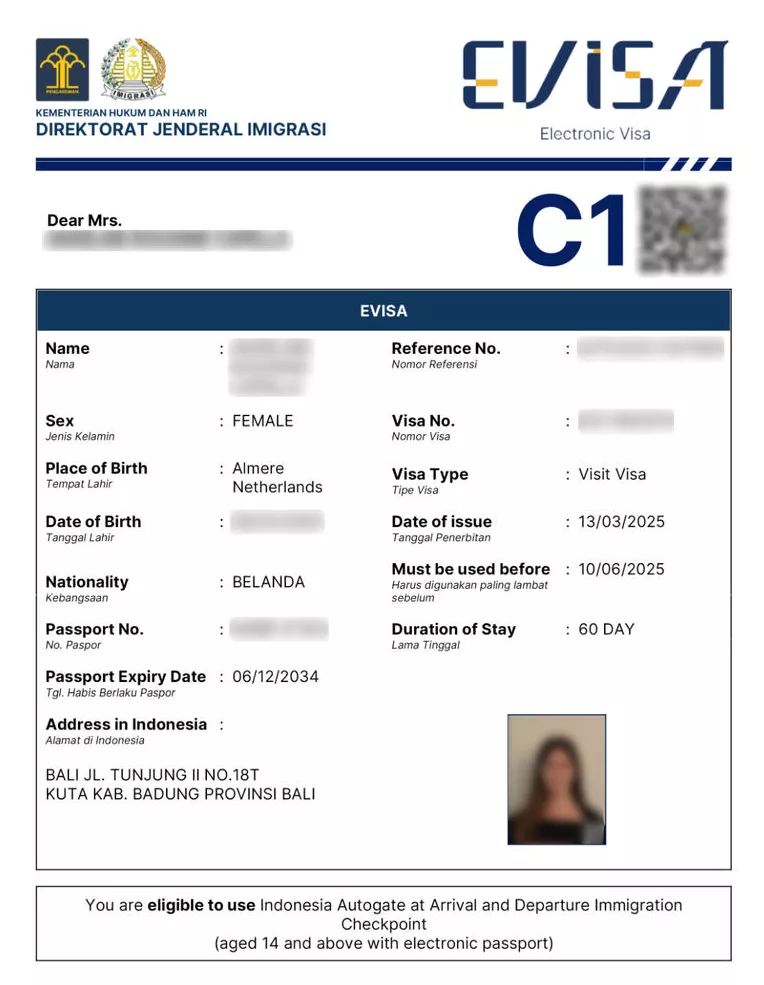
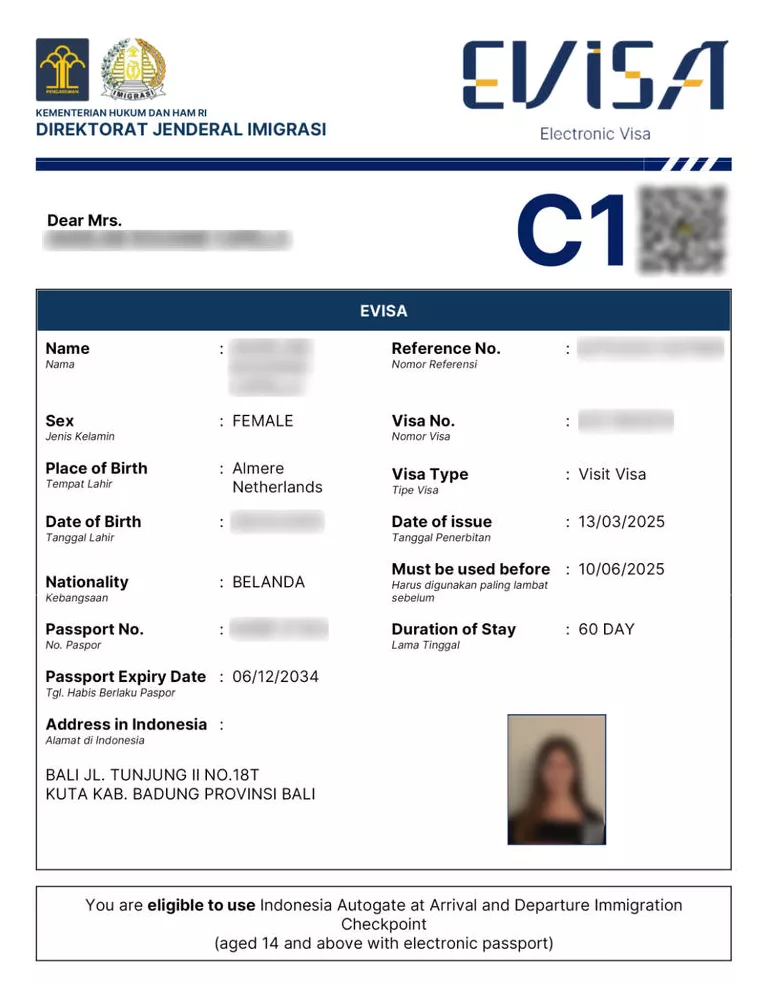
If approved, you will receive an electronic visa (e-visa) via email. Print this or keep a digital copy on your phone.
Step 5: Enter Indonesia
You must enter Indonesia within 90 days of the visa issuance date. Upon arrival, you will receive your KITAS stamp, which allows you to stay for 1 year.
Step 6: Register with Immigration
Within 30 days of arrival, register at the local immigration office (Kantor Imigrasi) to obtain your official KITAS card.
Learn more about the general application process in our step-by-step application guide.
E33G Visa Fees
The cost of the E33G Remote Worker Visa depends on where you apply and the processing speed:
| Fee Type | Applying Outside Indonesia | Applying Inside Indonesia |
|---|---|---|
| Regular processing | IDR 12,750,000 (~$780) | IDR 16,250,000 (~$995) |
| Priority processing | IDR 15,250,000 (~$935) | IDR 19,250,000 (~$1,180) |
| Processing time | 14 business days (regular) / 7 business days (priority) | Same |
Note: If you apply from within Indonesia, you must hold a valid visa with at least 30 days remaining before expiry. Many nomads enter on a visa on arrival or tourist visa and then apply for the E33G while in-country.
For a full breakdown of all Indonesia visa fees, see our visa fees guide.
B211A Social Cultural Visa: The Budget Alternative
If the E33G’s USD 60,000 income requirement is out of reach, the B211A Social Cultural Visa is the most popular alternative for digital nomads. While it does not officially authorize remote work, many nomads use it to stay in Indonesia long-term while working for foreign clients online.
B211A Key Details
- Cost: $50-$400 total (visa fee + extensions + optional agent fee)
- Initial stay: 60 days, extendable 4 times (30 days each) up to 180 days
- Sponsor required: Yes – an Indonesian individual or organization must act as your guarantor
- Single entry: If you leave Indonesia, the visa expires and you must reapply
How to Get a B211A Sponsor
The sponsor requirement is the biggest hurdle for nomads. Your options:
- Visa agents in Bali and Jakarta can arrange a sponsor for a service fee ($50-$200)
- Coworking spaces and coliving communities sometimes sponsor members
- Indonesian friends or contacts who are willing to act as your guarantor
- Language schools and cultural programs can sponsor you if you enroll in a course
For the full B211A application process, document requirements, and extension details, see our complete B211A Social Cultural Visa guide.
Best Places in Indonesia for Digital Nomads
Bali
Bali is the undisputed digital nomad capital of Southeast Asia. Popular areas include:
- Canggu – The main hub for nomads, with dozens of coworking spaces, cafes with fast WiFi, and a surf culture
- Ubud – Quieter, surrounded by rice terraces, popular with wellness-focused nomads and creatives
- Sanur – More relaxed beach town, good for families and those wanting a quieter base
- Seminyak – Upscale area with restaurants, beach clubs, and reliable internet
Other Cities
- Jakarta – Indonesia’s capital offers urban coworking spaces and a growing startup scene
- Yogyakarta – Affordable city with strong cultural offerings and improving digital infrastructure
- Lombok – Bali’s quieter neighbor, gaining popularity with nomads seeking less crowded alternatives
For more Bali-specific visa information, check our Bali visa guide.
Internet and Coworking in Indonesia
Indonesia’s internet infrastructure has improved significantly in recent years, especially in Bali and Jakarta.
- Average WiFi speed: 20-50 Mbps in coworking spaces and cafes
- Mobile data: 4G coverage is widespread; 5G available in Jakarta and parts of Bali
- SIM card: Get a local Telkomsel or XL SIM for reliable mobile data (~$10-$20/month for 30-50GB)
- Coworking prices: $100-$250/month for a dedicated desk; day passes $10-$20
Tax Considerations for Digital Nomads
Tax obligations depend on your situation:
- E33G holders: May be considered Indonesian tax residents if staying more than 183 days. Indonesia has a progressive tax rate of 5%-35% on worldwide income. Consult a local tax advisor.
- B211A holders: Generally not considered tax residents since the visa is for less than 180 days. Income earned from foreign sources is typically not taxed in Indonesia.
- Double taxation agreements: Indonesia has tax treaties with many countries. Check if your home country has an agreement to avoid being taxed twice.
Important: This is general information, not tax advice. Consult a qualified tax professional for your specific situation.
Tips for Living in Indonesia as a Digital Nomad
- Open a Wise or Revolut account before arriving – these give you local bank details for receiving payments and avoid high wire transfer fees
- Get health insurance – Indonesia does not have a public healthcare system for foreigners. World Nomads, SafetyWing, or Cigna Global are popular options among nomads
- Rent monthly – Airbnb monthly rates in Canggu or Ubud range from $400-$1,200 for a furnished apartment or villa
- Use a VPN – Some websites and services are blocked in Indonesia. A reliable VPN is essential for remote work
- Respect local customs – Indonesia is a predominantly Muslim country. Dress modestly outside tourist areas, and be mindful of cultural norms, especially during Ramadan
FAQs About the Indonesia Digital Nomad Visa
Can I legally work remotely in Indonesia on a tourist visa or visa on arrival?
Technically no. A tourist visa or visa on arrival does not authorize any form of work, including remote work for foreign employers. The E33G Remote Worker KITAS is the only visa that explicitly permits remote work. However, enforcement against remote workers on tourist visas is rare in practice.
How much money do I need to earn to get the Indonesia digital nomad visa?
The E33G Remote Worker Visa requires proof of income of at least USD 60,000 per year. You must also show a bank balance of at least USD 2,000 (if applying from outside Indonesia) or USD 5,000 (if applying from within Indonesia) over the last 3 months.
Can I switch from a B211A visa to an E33G while in Indonesia?
No, you cannot convert a B211A visit visa into an E33G KITAS while in Indonesia. You would need to leave the country, apply for the E33G from outside Indonesia, and re-enter with the new visa. However, if you hold another type of valid visa with at least 30 days remaining, you can apply for the E33G from within Indonesia.
Is the B211A visa safe for digital nomads to use?
The B211A is widely used by digital nomads and enforcement against remote workers is extremely rare. However, it is technically not authorized for work. If you want full legal protection, the E33G is the safer choice. Many nomads use the B211A without issues, but you should understand the legal distinction.
Can I open a bank account in Indonesia with a digital nomad visa?
With an E33G KITAS, you can open a local bank account at major Indonesian banks like BCA, Mandiri, or BNI. With a B211A visit visa, most banks will not open an account for you. Digital payment apps like GoPay and OVO work with international cards as alternatives.
What happens if I overstay my digital nomad visa?
Overstaying incurs a fine of IDR 1,000,000 (approximately USD 65) per day. Extended overstays can result in detention, deportation, and a ban from re-entering Indonesia. Always track your visa validity and apply for extensions or renewals well before expiry.
Can I bring my family with me on a digital nomad visa?
Yes. E33G KITAS holders can sponsor dependent visas for their spouse and children. Each dependent needs their own application and passport. B211A holders can have family members apply for their own B211A visas through the same sponsor.
Do I need to pay taxes in Indonesia as a digital nomad?
It depends on your visa type and length of stay. E33G holders staying more than 183 days may be considered tax residents. B211A holders staying under 180 days are generally not considered tax residents. Indonesia has double taxation agreements with many countries. Always consult a tax professional for advice specific to your situation.
What is the best visa for digital nomads who want to stay less than 6 months?
For stays under 6 months, the B211A Social Cultural Visa is the most practical option. It costs significantly less than the E33G, does not require a $60,000 income, and allows stays of up to 180 days with extensions. The trade-off is that it technically does not authorize remote work and requires an Indonesian sponsor.