

Planning a trip to Bali? You will need a visa unless you hold a passport from one of Indonesia’s visa-exempt countries. Most tourists choose between the Visa on Arrival (VoA), the e-Visa on Arrival (e-VoA), or a single-entry visitor visa (C1). This guide covers every option, the costs, required documents, and how to apply so you can enter Bali without delays.
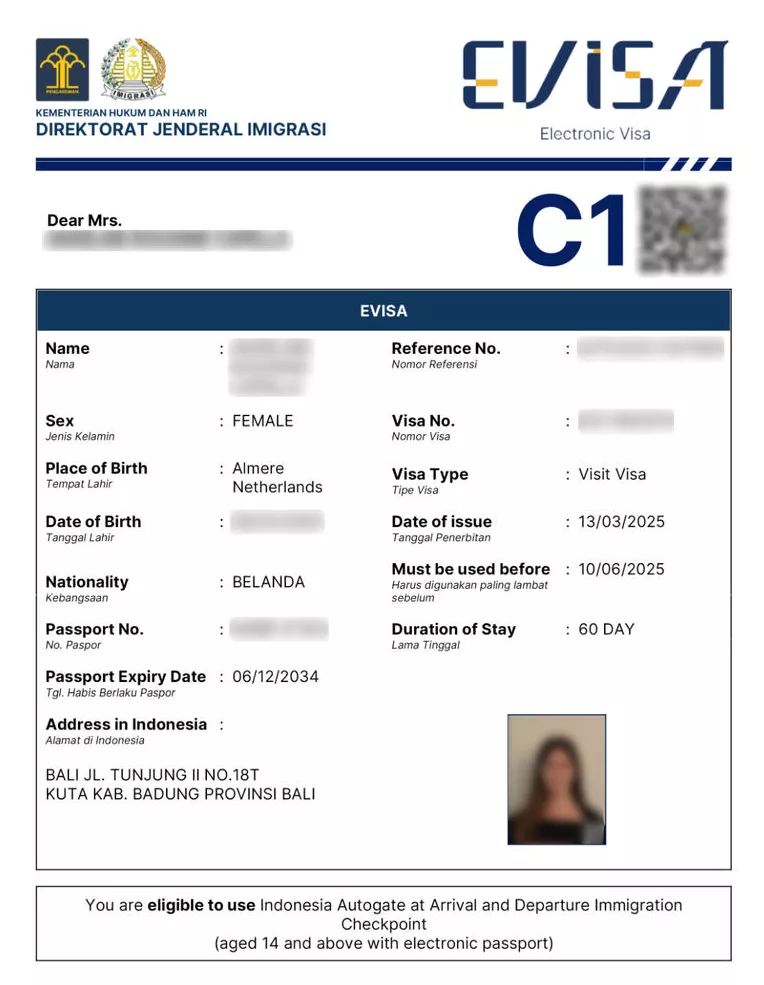
Bali sits within Indonesia’s immigration system, so the same visa rules apply whether you land at Ngurah Rai International Airport or enter through Jakarta or any other official port. Understanding your visa options before departure saves time, avoids overstay fines, and ensures a smooth arrival on the island.
Visa Options for Bali: Quick Overview
Indonesia offers several visa categories for visitors heading to Bali. The right choice depends on your nationality, length of stay, and purpose of visit.
| Visa Type | Cost | Duration | Extension | Best For |
|---|---|---|---|---|
| Visa on Arrival (VoA) | IDR 500,000 (~$35) | 30 days | 1x (30 more days) | Short holidays |
| e-Visa on Arrival (e-VoA) | IDR 500,000 (~$35) | 30 days | 1x (30 more days) | Pre-approved entry |
| C1 Visitor Visa | IDR 1,500,000 (~$95) | 60 days | 1x (60 more days) | Longer stays |
| Visa-Free Entry | Free | 30 days | No | Select nationalities |
| B211A Social Visa | Varies | 60 days | Up to 4x | Social/cultural visits |
Citizens of over 90 countries can obtain a Visa on Arrival or e-Visa on Arrival at Bali’s airport. If your nationality qualifies, the e-VoA is the smartest option because you receive approval before boarding your flight. Check the full Indonesia visa requirements to confirm your eligibility.
Visa on Arrival (VoA) at Bali Airport
The Visa on Arrival remains the most common way tourists enter Bali. You purchase it at the immigration counter upon landing at Ngurah Rai International Airport (DPS) in Denpasar.
Eligibility: Citizens of 97 countries qualify for the VoA, including the United States, United Kingdom, Canada, Australia, and all EU member states.
Cost: IDR 500,000 (approximately $35 USD). Payment accepts Visa, Mastercard, and JCB debit or credit cards. Some counters also accept cash in Indonesian Rupiah.
Duration: The VoA grants a 30-day stay. You can extend it once for an additional 30 days by visiting a local immigration office before the initial period expires.
Process at the airport:
- Proceed to the Visa on Arrival counter before immigration
- Present your passport (minimum 6 months validity, 1-2 blank pages)
- Pay the IDR 500,000 fee
- Receive your VoA sticker
- Continue to the immigration counter for passport stamping
The airport process typically takes 15-30 minutes during peak hours. Read more about visa on arrival costs and payment methods.
e-Visa on Arrival (e-VoA): Apply Before You Fly
The e-Visa on Arrival lets you secure your visa online before departure through Indonesia’s official immigration portal (evisa.imigrasi.go.id). It costs the same as the airport VoA but eliminates the queue at the arrival counter.
How to apply for the e-VoA:
- Visit the official Indonesian e-Visa portal
- Create an account or log in
- Select “Visa on Arrival” from the visa types
- Fill in your personal details, passport information, and travel dates
- Upload a passport photo and passport bio page scan
- Pay the IDR 500,000 fee online (Visa, Mastercard, or JCB)
- Receive your e-Visa approval via email within minutes to a few hours
- Print or save the e-Visa on your phone for presentation at immigration
Important: Your e-Visa must be used within 90 days of issuance. If you do not enter Indonesia within that window, the visa expires and you must reapply. The e-Visa application process has detailed step-by-step instructions.
Single-Entry Visitor Visa (C1)
If you plan to stay in Bali for more than 30 days, the C1 visitor visa is the better option. It grants a 60-day stay and is extendable once for an additional 60 days, giving you up to 120 days total.
Cost: IDR 1,500,000 (~$95 USD)
How to apply: The C1 visa requires an online application through the e-Visa portal. You submit the same documents as the e-VoA but select the C1 category. Processing typically takes 3-5 business days.
Who should choose the C1:
- Digital nomads staying 1-3 months
- Travelers on extended holidays
- Visitors attending events or retreats
- Anyone wanting flexibility without worrying about extensions early
Compare all Indonesia visa types to find the best fit for your trip length and purpose.
Documents You Need for Bali Entry
Regardless of which visa option you choose, prepare these documents before departure:
Mandatory for all visitors:
- Passport valid for at least 6 months from your date of entry
- At least 1-2 blank passport pages for stamps
- Return or onward flight ticket
- Proof of accommodation in Bali (hotel booking or invitation letter)
- Completed electronic customs declaration (e-CD), filled out online before arrival
Recommended for smoother processing:
- Proof of sufficient funds (bank statement or credit card)
- Travel insurance covering your stay in Indonesia
- Printed copy of your e-Visa approval (if using e-VoA)
- Passport-sized photos (4×6 cm, white background) for extensions
Bali’s immigration officers may ask to see any of these at the counter. Having them ready prevents delays and secondary inspections. See the complete documents checklist for every nationality.
Bali Visa Fees Summary
| Visa Type | Fee (IDR) | Fee (USD) | Extension Fee |
|---|---|---|---|
| Visa on Arrival | 500,000 | ~$35 | IDR 500,000 |
| e-Visa on Arrival | 500,000 | ~$35 | IDR 500,000 |
| C1 Visitor Visa | 1,500,000 | ~$95 | IDR 1,500,000 |
| Visa-Free Entry | Free | Free | Not extendable |
| B211A Social Visa | Varies | $150-300 | IDR 500,000 |
Overstay fines are IDR 1,000,000 per day (~$65). Always extend your visa before it expires or leave and re-enter to reset your stay. For the latest fee breakdown, see our Indonesia visa fees guide.
Extending Your Bali Visa
You can extend both the VoA/e-VoA and the C1 visitor visa once. The extension process works as follows:
- Visit a local immigration office in Bali (Denpasar, Kuta, or Nusa Dua offices)
- Bring your passport, current visa, and passport photos
- Fill out the extension application form
- Pay the extension fee (IDR 500,000 for VoA, IDR 1,500,000 for C1)
- Wait 5-7 business days for processing
- Return to collect your passport with the extended stay stamp
Start the extension process at least 7 days before your visa expires. Waiting until the last day risks delays and potential overstay.
Country-Specific Entry Rules for Bali
Not all nationalities receive the same treatment at Bali immigration. Here is a quick breakdown:
Visa-free entry (30 days): Citizens of select ASEAN nations including Singapore, Malaysia, Thailand, Philippines, Vietnam, Brunei, Cambodia, Laos, and Myanmar.
Visa on Arrival eligible (97 countries): United States, United Kingdom, Canada, Australia, New Zealand, all EU/Schengen states, Japan, South Korea, India, China, Russia, Brazil, South Africa, and most Middle Eastern nations.
Must apply in advance: Citizens of countries not on the VoA or visa-free lists must apply for a visa at an Indonesian embassy or through the e-Visa portal before traveling.
Always verify your specific nationality’s eligibility on the official Indonesian immigration website before booking flights. Policies change, and the visa requirements page is updated regularly.
Bali Entry Points
Most visitors arrive through Ngurah Rai International Airport (DPS) in Denpasar, Bali’s only international airport. The airport has dedicated Visa on Arrival counters, e-Visa verification lanes, and immigration checkpoints.
You can also enter Indonesia through Jakarta (CGK) or Surabaya (SUB) with any valid visa and travel domestically to Bali. Your visa allows entry through any official Indonesian port of entry.
FAQs About Bali Visas
Do I need a visa to visit Bali?
It depends on your nationality. Citizens of ASEAN countries may enter visa-free for 30 days. Citizens of 97 other countries can get a Visa on Arrival or e-Visa on Arrival for IDR 500,000 (~$35). Check the official eligibility list before you travel.
How much does a Bali visa cost?
The Visa on Arrival and e-Visa on Arrival both cost IDR 500,000 (~$35 USD). The C1 visitor visa costs IDR 1,500,000 (~$95 USD). Visa-free entry is free for eligible nationalities.
Can I extend my visa in Bali?
Yes. You can extend both the VoA and C1 visa once at a local immigration office. VoA extensions cost IDR 500,000 and add 30 more days. C1 extensions cost IDR 1,500,000 and add 60 more days.
What happens if I overstay my Bali visa?
Overstaying carries a fine of IDR 1,000,000 per day (~$65 USD). Extended overstays can result in detention, deportation, and a ban from re-entering Indonesia. Always extend or leave before your visa expires.
Should I get a Visa on Arrival or e-Visa on Arrival?
The e-Visa on Arrival is recommended because you get approval before flying. It costs the same as the airport VoA but lets you skip the payment counter at the airport. You still go through immigration but with a pre-approved visa.
How long does the e-Visa on Arrival take to process?
Most e-VoA applications are approved within minutes to a few hours. Apply at least 3-5 days before departure to account for any delays or additional document requests.
Can I work in Bali on a tourist visa?
No. Tourist visas (VoA, e-VoA, C1) do not permit employment. Working in Bali requires a proper work visa (C2 or KITAS) sponsored by an Indonesian employer. Overstaying or working illegally can result in deportation.
Is travel insurance required for Bali?
Travel insurance is not a visa requirement but is strongly recommended. Medical care in Bali can be expensive for foreigners. Some immigration officers may ask for proof of insurance, especially for longer stays.
Do children need a separate visa for Bali?
Yes. Every traveler, including infants and children, needs their own passport and visa. The same fees and rules apply regardless of age.
Can I enter Bali with a one-way ticket?
Indonesia requires proof of onward or return travel. A one-way ticket may result in denial at check-in or immigration. Book a refundable onward ticket if your return date is flexible.